Energy Medicine DNA

Call your Psychic!

  • Home
  • Raves
    • Share Your Experience
  • Education
    • Self-Help Toolbox
    • DNA Activations
      • DNA FAQ
    • Chakras
    • Lords of Karma
  • Services
    • DNA Activations
      • DNA FAQ
    • Psychic Readings
      • Chakra Audio Program
      • Developing Clairvoyance
    • Karmic Clearing – Essential Energy Balancing
      • EEB I Workshop
      • EEB II Workshop
      • EEB III Workshop
      • EEB FAQ
    • Reiki Classes
      • Essential Reiki I
      • Essential Reiki II
      • Essential Reiki III
    • Psychic Parties
    • Intuitive Coach and Mentor
      • Relationship Coaching
    • Hypnotherapy
  • Books & Products
    • Audio Downloads
    • Books
    • Live Intuitively: Journal the Wisdom of your Soul!
    • 12 Weeks to Self-Healing
    • 12 Weeks to Self-Healing Audio Course
  • Events
  • Blog and Media
    • Blog
    • Media
      • Videos
      • Podcasts
    • Interviews
    • Articles
    • E-Newsletter
    • Site map
  • Contact
    • Contact Candess at candess@candesscampbell.com 509.363.1789

The Bully Archetype

November 16, 2016 by @candesscampbell

The creativity of your subconscious mind not only shows up in dreams, but also shows up as archetypes in your life. Archetypes are overlying patterns that show up in all cultures that are seeded in the psyche. Some examples of archetypes are mother, judge, teacher and healer. When you begin to look at these patterns in your life, you can unleash your creative energy. You can access your natural path, heal your wounds and move toward your Divine Soul purpose.

Today we will explore the Bully Archetype. This article was first written in response to a situation that I was privy to regarding a child who suffered from bullying from his father. It is apropos today as many live in fear due to the recent election in the United States. The scope of the Bully archetype is massive. There is bullying in the workplace, on college campuses, in schools and schoolyards and as seen in the news on a daily basis today, there are bullies attempting to take over countries!

When looking at the psyche and bullying, there is even the issue of bullying yourself and internally beating yourself up. There is so much about this archetype that can be explored. This article is taking a small slice of the issue and will focus on parents who bully their children. This may be a difficult topic to read about, but I think you will find it valuable.

Recently, when listening to others share stories, the topic of abusive yelling has surfaced over and over again. As an adult, if someone yelled at me, I would just walk away. Children don’t have the ability to do this. The response is generally to shut down and be quiet, to fight back, or to get revenge.
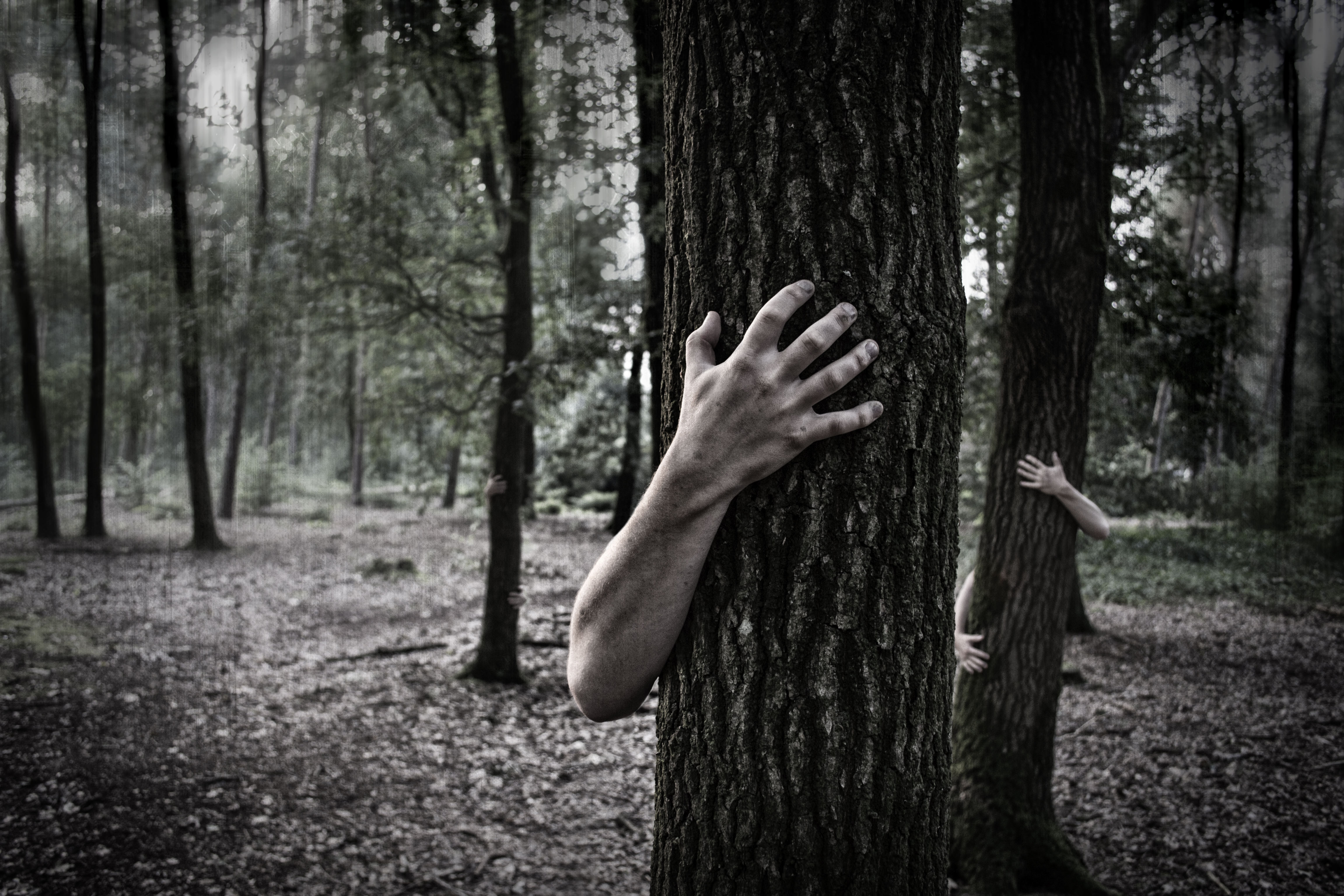
Photoshop Backup 7 577What is bullying and why do people bully? First of all there is a difference between bullying and having the bully archetype. There may be periods of time where someone uses bullying in his or her life and then learns skills to behave more appropriately. Having the bully archetype is when this tendency becomes a strong part of their personality. It becomes a pattern that directs their behavior in an attempt to dominate another person or ultimately, to control their own coward within.

Bullies often use threats or coercion to gain power over another. They will intimidate and be abusive. Sometimes the bully will use physical power to dominate, but here I want to look at the emotional abuse of bullying.

Children especially are vulnerable and parents, in an attempt to control them may use yelling and threatening. They may resort to name-calling, shaming, and other aggressive measures. The reality is, in their attempt to control the child, they are really only showing that they themselves are out of control.

So what happens to these children who are bullied at home? One response is to become quiet and withdraw. On the outside they may appear to become a well-adjusted, compliant child, but on the inside they have a mind of constant negative self-talk. This self-talk can be anger directed at their parent, but more often, it is directed at themselves. This internal abuse becomes a survival technique. In their own attempt at gaining some control they use self-abuse. In some cases this is not just abusive self-talk, but turns into using sharp objects to physically cut on themselves. This may be to release the pain they feel. They want to let it out. When they do this, they may think no one else can hurt them as much as they can hurt themselves. The parent’s response to this may be to use force to try to control the child even more. They blame the child (the victim of the bullying) rather than looking at and owning their own behavior.

[clickToTweet tweet=”Children respond to bullying in a couple of ways!” quote=”Do you have the Bully Archetype?”]

Some children become compliant and work hard so they are not abused. These children excel in school, on the football team and become the leaders in their community. They develop manipulative skills that serve them at home and in other areas of their lives. As adults these skills can go either way. They can help them catapult to the top or eventually destroy their relationships and career.

Sometimes children end up not using their full potential. They may be extremely bright, but end up with low grades. They may have mental health problems such as depression, anxiety, or behaviors such as over-eating or using drugs. Turning their fear, hurt and anger inward eats them alive. When these children become adults, these old wounds begin to surface in their relationships, their jobs, and in their health.

Another way that children survive is to rebel and fight back. What happens here is there is continual yelling, conflict and fighting between the child and the parent. It becomes a battle of the wills. The children may also run away to get away from the situation. These children often go on to bully others, including their siblings. Although they fight to gain power, ultimately the parent has the power because they control the money and the access to the child’s fun and freedom. For children, other than their need for love, their need for fun is essential. In this case the parent continues to be out of control and the child continues to suffer from emotional abuse.

Another way children respond the to bullying is to get revenge. There are several ways they do this. One is directly by breaking something of value to the parent. They may also “tell on” the parent. In this case they may tell their friends, reach out to a teacher, a neighbor, a relative or even the police. They may also share in front of others something embarrassing that the parent did. Often this is difficult for the child because, even though they are angry and feel the parent isn’t fair, they also feel at fault.

Another way they get revenge is indirectly through passive aggressive behavior. Passive aggressive behavior is a way that people express their anger, frustration or hostility indirectly. The child may not finish their chores or move really slowly when the parent is in a hurry. They could pick at something like a lampshade making small holes in it that are not noticeable to their dad. Children who underachieve may be being passive aggressive, especially if the parent has a high need for them to excel. Other passive aggressive behaviors are using sarcasm, being stubborn, or procrastinating. Whatever would get back at the parent without immediate repercussion gives them some sense of power.

So what should a child do when they have an abusive or bullying parent? It is important that they find a safe adult who can help them. As a reader of this article, I ask you to be aware of the children around you and to make sure that they know you are a safe adult. Talk to the children around you and get to know them. Build a rapport so they understand that you are someone they could trust and depend upon. You never know if the child is secretly suffering in her own home.

What if you find that you have the Bully Archetype fully active in your own life at this time? Whatever situation you find yourself in, if you find that you are yelling, name-calling, taking or breaking someone else’s belongings, or even pushing and shoving or other violence, it is important to get help!

There are so many resources for you. One I would suggest first is to find a counselor or a minister that you can confide in. Counselors will provide you with a safe place to learn how to manage your anger and to gain better control in your own life. If you have a child that is difficult to manage, a counselor can assist you with some parenting skills. What happens is the more out of control you feel, the more you try to solve the problem yourself and the less likely you are to resolve the issue. Remember the bully in you, the bully archetype is covering for the inner coward. It takes courage to reach out and get assistance. Seeing a counselor becomes a confidential place for you to share and it is the counselor’s job to listen, support, teach and provide resources for you.

Another resource in addition to counseling is to educate yourself about the problem. Search for books on dealing with your anger. The first step to changing a behavior is identifying it and owning it. You will be amazed at the relief you feel when you start to learn simple steps to shift the pattern that has taken over your life. If you find you are bullying someone, then you too are certainly bullying yourself in the process.

The Bully archetype may or may not be a significant archetypal pattern for you. If it is, remember archetypes cross cultures from the beginning of time and so you are not alone. This is a pattern that can be balanced. The positive attribute of the bully archetype is learning to become courageous. As you reflect, take notes on this and other archetypes you identify with. Notice what thoughts, feelings, and memories have surfaced for you when reading this article. Think about how others see you. Is there something you noticed that is blocking you from your Divine Soul Purpose?

This article was first published in Live Encounters Magazine and updated and republished here.
 

You have the Power!

November 9, 2016 by @candesscampbell

You have power over your mind – not outside events.

Realize this, and you will find strength.

 Marcus Aurelius, Meditations

Being healthy, feeling peaceful and calm, and manifesting abundance are all related to being grounded and centered in your life. As an intuitive reader what I see the most in clients, is they are not grounded and not in present time.

It’s helpful for the body to have a sense of feeling grounded. You can do this by closing your eyes, taking a deep breath and imagining a grounding cord coming from the base of your spine below the tailbone.  This grounding cord can be like a waterfall, a beam of light or a tree trunk.  The grounding cord goes down through the chair, floor, and down into the fiery center of Mother Earth.

Your body feels safe when you are grounded. You can release energy, tension, fear, and anxiety down the grounding cord which helps to prevent stress and in turn may prevent illness.  Grounding is a self- healing tool. You and more able to manifest when your are grounded and in present time.

[clickToTweet tweet=”Difficult time? Clear your energy field and chakras with this 12 minute meditation! http://bit.ly/2elnY8R” quote=”Difficult time? Clear your energy field and chakras with this 12 minute meditation! http://bit.ly/2elnY8R”]

(It’s fun for me to watch this video and see Mattie Grace who we lost a few years ago. I want to re-film this practice because I think I look better with age. We also lost Domingo, but have been adopted by a Russian Blue named Princess Gray!

Vote!

November 8, 2016 by @candesscampbell

This is an incredible time to be alive and I am so grateful for the right to vote on this election day in the US.  No matter who wins, focus on loving others regardless of their beliefs. We all have an opportunity to stop the polarization and remember that we live together on this growing, breathing planet.

focus-on-the-light1

Be compassionate, Be loving, Be Kind!

Matching the Energy of Others

October 27, 2016 by @candesscampbell

In a Meditation class I took at the Church of the Divine Man many years ago, I learned about “matching” other people’s energy. For instance, if you are around someone who is angry, you may match him and become angry. When you are matching someone who is peaceful, you feel peaceful. Its important to be aware of others you spend time with and discern whether or not the feelings you have are yours or theirs.

A study I read (cannot find source) involved the growth of three plants. One plant was the control and the plant was watered without any variables. The second plant was watered with water where someone who was very happy and positive held the water for a period of time and the third plant was watered with water that was held for a period of time by someone who was clinically depressed. Of course, the result was the plant watered by the person who was happy grew the most; the control the second and the plant watered by the person who was depressed had stunted growth.

plant

Physics has taught us that everything is energy and it makes sense we affect each other in subtle and powerful ways.  When I feel blue, a little grumpy, I will listen to Abraham-Hicks on YouTube to shift my energy and raise my mood. Conversely, when I binge on sad music that I listened to as a young person such as Johnny Cash singing Sunday Morning Coming Down, I have to pick myself up off the floor!  

[clickToTweet tweet=”We affect each other’s energy positively or negatively!” quote=”We affect each other’s energy positively or negatively!”]

My focus in my work for years has been to empower others to access their intuition and live at their highest vibration. 

[clickToTweet tweet=”Take some time today to think about who energizes you.” quote=”Take some time today to think about who energizes you.”]

img_5861

Who helps you become your better Self? Who leads the way and makes it easier for you to excel and manifest your dreams? Think about who it is that drains your energy and leaves you feeling bad about yourself. Sometimes we can’t change who we are around, but we can use those who are motivating and inspiring to bring us back into balance. Being in nature is another way to shift your energy into a higher vibration and release the negativity.

The Vampire Archetype!

October 19, 2016 by @candesscampbell

The creativity of your subconscious mind not only shows up in dreams, but also shows up as archetypes in your life. Archetypes are overlying patterns that show up in all cultures that are seeded in the psyche. Some examples of archetypes are mother, judge, teacher and healer. When you begin to look at these patterns in your life, you can unleash your creative energy.

[clickToTweet tweet=”Who are the Vampires in your Life?” quote=”With Halloween around the corner and an expectation of ghosts and goblins knocking at my door – I thought this would be a great time to share about the Vampire Archetype!”]

Many cultures are intrigued and fascinated with vampires. Vampires were mythological figures that lived off the essence of others by drinking their blood.

pumpkinHonestly, they give me the creeps, but the adrenaline rush others get from the scariness of blood and gore may be part of the attraction. There is a seductive nature to the vampire as well.

A person with the Vampire Archetype tends to live off of the energy essence of others. Have you ever felt drained by someone you worked with, even if they didn’t talk much? Do you have people in your life that seem to steal your energy? Do you have friends that exhaust you just by being with them?

Maybe you have the Vampire Archetype. After spending time with someone, do you feel energized and then you notice they look like all the blood drained from their face. Do you find others avoid you? Do you come off as clingy or needy? Are you continually looking to others for validation or to make you feel better?

Historically, in many dramas, real or written, the Vampire Archetype has been featured in many male and female relationships. In these cases, there is eroticism between the vampire and his conquest. The female is repelled by the vampire, but also drawn into the sexual nature of the submissiveness. In this case, the male overpowers the female, taking her energy for himself. Today, this archetype may be underlying many domestic abuse situations.

[clickToTweet tweet=”A person with the Vampire Archetype tends to live off of the energy essence of others. ” quote=”A person with the Vampire Archetype tends to live off of the energy essence of others. “]

Currently, people are more aware of the energy around their body, of energy exchange, and how they feel when they are around others. A woman with a Vampire Archetype may come off as loving and helpful, but when she leaves, you may feel like she took a piece of you with her. She may continually ask you for more than you can give or do. She may complain constantly. Maybe you have had a relationship with a man and ended it and he won’t leave. He may continue to cling to you or even stalk you. The codependent relationship may fit into this category.

[clickToTweet tweet=”Do you have people in your life that seem to steal your energy?” quote=”Do you have people in your life that seem to steal your energy?”]

Rather than vampires looking gory and dressing in black and gray with blood dripping down, today they look like anyone else in your life. Much of my work for the last 25 years has been around energy and energy medicine. As an intuitive reader I look into the aura and the chakras of my clients and can see where they are losing power, where they are either giving their power away or being attacked.

scaryWhen someone attaches to you or hits you energetically, you are drained, depressed and sometimes somewhat paralyzed. When you are managing your own energy within yourself and not enmeshed with others, not trying to control others or attaching to others, you feel good!

Previously, I psychically read a woman who had been attacked by another woman who was envious of her. She experienced being hit energetically. When this happened, she felt slimed. As soon as she identified this feeling, I was able to look at her energetically and see who hit her and why. I cleared her energy field right away and put up protection so this could not continue to happen. The person who attacked her has the Vampire Archetype. With further investigation, I understood the language the attacker continually uses is one of lack. She has a scarcity perception. She attaches to others and attacks others, for their life force, rather than understanding that she can fill herself up from within. Instead of being grateful, she focuses on what others have, turns green with envy and becomes toxic. Instead of being full of self-love and loving others, she is continually full of judgment and fear. Although she presents herself as being knowledgeable, slyly her toxicity affects everyone around her.

What do you do if you have a person like this in your life? You can learn to ground yourself and run your own energy (earth and cosmic) and set up protection. I have many meditation tools and videos you can access to do this on my website. You can focus in your heart and bring your attention up out of your crown chakra at the top of your head. See the person there and for three seconds see them receiving a ball of golden white Light, of Love from the Universe. Then let them go. Do this as often as you need to release them from your thoughts. It will be up to the person as to whether they will receive this clearing or not. You though, have in part cleared yourself from their negativity and their energy.

What if you have the Vampire Archetype? You can balance yourself by giving to others without expectation. First, keep your energy clear with the same meditation tools and videos I mentioned above and allow yourself to receive in ways that give you a sense of personal power and self-worth. You can volunteer or help out those around you. Find a counselor or life coach to help you heal the past so that you can be healthy in the present.

If you’re not consciously aware of your energy and how the Vampire archetype is affecting you, you may notice the vampire showing up in your dreams. You may dream you have an encounter with a person or an entity that drains you. You may be paralyzed or even gorier, lose blood. Whether the vampire image in the dream is fictional or someone you know, the vampire sneaks up and suddenly has taken your life force.

Dreams can be scary even though they are coming as a message from your Higher Self. Taking time to work with dreams can be empowering and guide you to take action in your life. If you want to explore your dreams, the book I recommend is Realities of the Dreaming Mind: The Practice of Dream Yoga by Swami Sivananda Radha.

By understanding and working with the Vampire Archetype, you will learn to protect yourself, or if it is your archetype to heal yourself and access your natural path of health and move toward your Divine Soul purpose.

Here is your chance to leave feedback about your experiences of people who have shown up as Vampires in your life! I will be happy to share with you some tools to protect yourself from being attached and losing energy!

This article was previously posted in Live Encounters Magazine.

Is Trump a Sex Addict?

October 12, 2016 by @candesscampbell

However you lean politically, the media is clearly bringing to the surface an issue that affects a large population in our country – Sex Addiction!

CNN, Fox News, MSNBC and others are all playing over and over the Access Hollywood video by Billy Bush where Trump showed his cards in how he thinks about and treats women.

With the accessibility of stimulation through the Internet and mobile phones, sexual addiction has come to the forefront. Celebrities behaviors are also being recorded and shared in public. In my private practice as a mental health and addictions counselor, more and more clients are showing up who need help from this addiction. Whether it be prostitution, pornography or chronic masturbation, it can wreak havoc in their lives and the lives of those they love. In response to this, the treatment community has begun to use sexual addiction assessments along with alcohol and drug assessments.

Working as a chemical dependency counselor at a Federal prison camp in the mid-1990s, during the “war on drugs,” we began assessing for childhood sexual abuse and past sexual abuse. Nearly all of the female clients had been sexually abused. Some of the men said yes, but I suspect even with the promise of confidentially, they did not admit to this. Many who have been abused don’t remember, but issues show up later in their lives in relationship.

Most of my clients who were diagnosed as sex addicts had been women and men who had a history of past sexual abuse and at some level attempted to find balance and healing, but instead found themselves in relationships where they became sexually addicted and often exploited. Some went on to be sex offenders. One example is a past client I counseled. He had been abused by his older brother and then went on to sexually abuse his nephew.

A leader in the field of Sexual Addition treatment is Douglas Weiss, PhD. This article summarizes the 6 Types of Sexual Addicts, a model he developed, which became the standard used to certify Sexual Recovery Therapists by the American Association for Sex Addiction Therapy.

[clickToTweet tweet=”‘In a normal situation, a person is having sex inside a relationship context.'” quote=”Weiss explains, “in a normal situation, a person is having sex inside a relationship context. He/she is gluing to the person, the eyes, and the soul of the person he/she is being sexual with.” This is different than having the object of sexual fulfillment being images that do not respond. Addiction creates lack of control, shame, and self-loathing and destroys relationships. “]

Six Types of Sexual Addicts

1. Biological Sexual Addict

Weiss states this is the most common sex addict. Basically the behavior is “ring the bell, feed the dog, ring the bell, feed the dog” like Pavlov’s conditioning. What happens is during orgasm; the endorphins that are released create an attachment to what is happening at the time. So whether this is a real or imaged person, the chemical release in the brain creates a bond. These endorphins, “almost four times as strong as morphine,” are the highest chemical reward the brain can come by, legally. Therefore, “your brain literally glues to, hungers for, craves, and wants to repeat that activity again.”

Weiss states that the Biological Sex Addict probably represents less than 15% of all sexual addicts, and is the baseline of all the sexual addictions. Most also have components of the other five types.

In my own counseling practice, many of my female clients who have a history of sexual abuse fall for his type of addict. They become the sexual object for them.

2. Psychological Sexual Addict

This person is often the one who has experienced emotional or physical abuse in his life. Due to the lack of love, touch, or security, as a child he sets up a fantasy life. This sense of neglect can carry on into adulthood and when his needs are not met at home, he creates a fantasy world where he feels adored, worshiped, and desired. This is the man who fantasizes he is the best, the biggest, the greatest, etc. If he has been dominated in his life he may fantasize as being the one who is dominating.

In his psychological fantasy, he feels sexually powerful, loved and wanted. In his imagination, he doesn’t have to deal with real women who may say no, ask him for commitment, ask for help with the housework or ask for emotional intimacy. Once this fantasy is paired with the powerful chemical endorphins, he is hooked.

3. Spiritual Based Sexual Addict

Similar to the psychological sexual addict, this addict is looking for a connection. There is a strong desire for a spiritual connection. They look to find it within their sexual addiction. In this case, once they have a spiritual experience through a religious encounter, an experience with Jesus or another guide or Guru, the sexual addiction stops. “Their sexual addiction just plain stops, because that’s where the origin of the ache or the need was for the individual.” These people rarely get help within the clinical community.

4. Trauma Based Sexual Addict

The trauma based sexual addict is the client I have most experience with. In this case, he or she has experienced sexual trauma, most likely as a child or adolescent. These clients go on to mirror their trauma in their relationships. For example a young girl who was sexually abused by an older uncle may end up in relationship after relationship with older men. She may despise herself for this, but continue the behavior and recreate the shame. A woman who has been physically abused in conjunction with a sexual trauma may act out being abused in the sexual act in order to be satisfied and make attempt after attempt to find the right partner, shaming herself all the way. She becomes a sexual addict that is also the sexual object of another addict.

5. Intimacy Anorexic

Although a separate issue from sexual addiction, Weiss states intimacy anorexia affects around 29% of sex addicts. Generally, the anorexic behavior is related to “sex addiction, sexual trauma, neglect in the family and cross gender attachment disorder.” There also may be related to other co-occurring disorders. Weiss describes intimacy anorexia as when a “spouse intentionally withholds emotional, spiritual and sexual intimacy.” They may control through silence, anger, or withholding money. They blame their spouse, withhold love, tend to be critical, and are unwilling to talk about their feelings. This is a difficult situation for the addict because as they are working on their own recovery, whether it be abstaining from prostitutes, masturbation, or pornography, they also need to learn to move toward their spouse or partner and re-create a healthy relationship. They have to learn to feel and communicate their feelings.

6. Mood Disorder

Sexual addicts who also have a mood disorder are another type of sex addict. Weiss shared about clients who were bipolar or had cyclothymic disorder and were medicating the imbalance neurologically through the ejaculation response. Until the medication was adjusted properly, they continued to relapse.

When you hear the term sexual addict, it may conjure up an image of someone being sexual, playful and having fun. The truth is the very opposite. Although the sexual thoughts and behavior may start that way, as in any addiction, the person loses control and their life spirals downward. Sexual addicts generally have low self-esteem and believe no one will love them as they are. They lack emotional intimacy and are continually pre-occupied with sex and sexual fantasies. They feel out of control and experience mood swings. They are filled with feelings of guilt and shame.

You may wonder, how sexual addiction is different from normal sexual behavior.

Weiss explains, “in a normal situation, a person is having sex inside a relationship context. He/she is gluing to the person, the eyes, and the soul of the person he/she is being sexual with.” This is different than having the object of sexual fulfillment being images that do not respond. Addiction creates lack of control, shame, and self-loathing and destroys relationships.

As with all addictions, recovery is a one-day at a time process. Interventions and treatment planning is different for each specific person. Most often when one is treated for sexual addition, the chances of recovery are better when their spouse or partner is involved.

In addition to treatment centers like the Heart to Heart Counseling Center in Colorado Springs, Colorado, where Dr. Weiss is the Executive Director, there are also 12 Step Programs such as Sex Addicts Anonymous. https://saa-recovery.org/ There are several other similar programs that provide help.

The Six Types of Sexual Addicts information came from a written interview of Dr. Weiss by Barbara Alexander and my email communication with him.

Douglas Weiss, Ph.D., is the Executive Director of Heart to Heart Counseling Center and the author of The Final Freedom: Pioneering Sexual Addiction Recovery (Discovery Press, 2008).

This article was published in part earlier in Live Encounters Magazine. http://liveencounters.net/january-2014/06-june-2014/dr-candess-m-campbell-sexual-addiction/

  • « Previous Page
  • 1
  • …
  • 13
  • 14
  • 15
  • 16
  • 17
  • …
  • 47
  • Next Page »

Candess M. Campbell, PHD.

Copyright © 2026 · Eli Overbey

Copyright © 2026 Energy Medicine DNA· Website Design by Inspired Melissa · Log in