Energy Medicine DNA

Call your Psychic!

  • Home
  • Raves
    • Share Your Experience
  • Education
    • Self-Help Toolbox
    • DNA Activations
      • DNA FAQ
    • Chakras
    • Lords of Karma
  • Services
    • DNA Activations
      • DNA FAQ
    • Psychic Readings
      • Chakra Audio Program
      • Developing Clairvoyance
    • Karmic Clearing – Essential Energy Balancing
      • EEB I Workshop
      • EEB II Workshop
      • EEB III Workshop
      • EEB FAQ
    • Reiki Classes
      • Essential Reiki I
      • Essential Reiki II
      • Essential Reiki III
    • Psychic Parties
    • Intuitive Coach and Mentor
      • Relationship Coaching
    • Hypnotherapy
  • Books & Products
    • Audio Downloads
    • Books
    • Live Intuitively: Journal the Wisdom of your Soul!
    • 12 Weeks to Self-Healing
    • 12 Weeks to Self-Healing Audio Course
  • Events
  • Blog and Media
    • Blog
    • Media
      • Videos
      • Podcasts
    • Interviews
    • Articles
    • E-Newsletter
    • Site map
  • Contact
    • Contact Candess at candess@candesscampbell.com 509.363.1789

3 Ways to Manage Anxiety

February 8, 2021 by @candesscampbell

There are so many situations that are critical at this time. What matters first is your situation. So often our anxiety increases when we focus on the future. Depression tends to be a result of focusing on the past.

Here are 3 ways to lessen your Anxiety. Pick one and practice.

  • Write out a list of what brings you joy.
  • When you notice negative thoughts, see if you can identify the voice. Is it your dad, mom, boss, or the imaginary perfect you?
  • Journal this Soul Stem as many times as you need.  I will be happy when . . .

 

The Bully Archetype

February 8, 2020 by @candesscampbell

This blog was originally published on this site in September 2015. I thought it would be good to re-publish it. There were no changes made to the original post.

The creativity of your subconscious mind not only shows up in dreams, but also shows up as archetypes in your life. Archetypes are overlying patterns that show up in all cultures that are seeded in the psyche. Some examples of archetypes are mother, judge, teacher and healer. When you begin to look at these patterns in your life, you can unleash your creative energy. You can access your natural path, heal your wounds and move toward your Divine Soul purpose.

Today we will explore the Bully Archetype. It is actually situations in my own life, well situations that I am privy to, that stimulate this writing on the Bully. The scope of the Bully archetype is massive. There is bullying in the workplace, on college campuses, in schools and schoolyards and as seen in the news on a daily basis today, there are bullies attempting to take over countries!

When looking at the psyche and bullying, there is even the issue of bullying yourself and internally beating yourself up. There is so much about this archetype that can be explored. This article is taking a small slice of the issue and will focus on parents who bully their children. This may be a difficult topic to read about, but I think you will find it valuable.

Recently, when listening to others share stories, the topic of abusive yelling has surfaced over and over again. As an adult, if someone yelled at me, I would just walk away. Children don’t have the ability to do this. The response is generally to shut down and be quiet, to fight back, or to get revenge.

Photoshop Backup 7 577What is bullying and why do people bully? First of all there is a difference between bullying and having the bully archetype. There may be periods of time where someone uses bullying in his or her life and then learns skills to behave more appropriately. Having the bully archetype is when this tendency becomes a strong part of their personality. It becomes a pattern that directs their behavior in an attempt to dominate another person or ultimately, to control their own coward within.

Bullies often use threats or coercion to gain power over another. They will intimidate and be abusive. Sometimes the bully will use physical power to dominate, but here I want to look at the emotional abuse of bullying.

Children especially are vulnerable and parents, in an attempt to control them may use yelling and threatening. They may resort to name-calling, shaming, and other aggressive measures. The reality is, in their attempt to control the child, they are really only showing that they themselves are out of control.

So what happens to these children who are bullied at home? One response is to become quiet and withdraw. On the outside they may appear to become a well-adjusted, compliant child, but on the inside they have a mind of constant negative self-talk. This self-talk can be anger directed at their parent, but more often, it is directed at themselves. This internal abuse becomes a survival technique. In their own attempt at gaining some control they use self-abuse. In some cases this is not just abusive self-talk, but turns into using sharp objects to physically cut on themselves. This may be to release the pain they feel. They want to let it out. When they do this, they may think no one else can hurt them as much as they can hurt themselves. The parent’s response to this may be to use force to try to control the child even more. They blame the child (the victim of the bullying) rather than looking at and owning their own behavior.

Some children become compliant and work hard so they are not abused. These children excel in school, on the football team and become the leaders in their community. They develop manipulative skills that serve them at home and in other areas of their lives. As adults these skills can go either way. They can help them catapult to the top or eventually destroy their relationships and career.

Sometimes children end up not using their full potential. They may be extremely bright, but end up with low grades. They may have mental health problems such as depression, anxiety, or behaviors such as over-eating or using drugs. Turning their fear, hurt and anger inward eats them alive. When these children become adults, these old wounds begin to surface in their relationships, their jobs, and in their health.

Another way that children survive is to rebel and fight back. What happens here is there is continual yelling, conflict and fighting between the child and the parent. It becomes a battle of the wills. The children may also run away to get away from the situation. These children often go on to bully others, including their siblings. Although they fight to gain power, ultimately the parent has the power because they control the money and the access to the child’s fun and freedom. For children, other than their need for love, their need for fun is essential. In this case the parent continues to be out of control and the child continues to suffer from emotional abuse.

Another way children respond the to bullying is to get revenge. There are several ways they do this. One is directly by breaking something of value to the parent. They may also “tell on” the parent. In this case they may tell their friends, reach out to a teacher, a neighbor, a relative or even the police. They may also share in front of others something embarrassing that the parent did. Often this is difficult for the child because, even though they are angry and feel the parent isn’t fair, they also feel at fault.

Another way they get revenge is indirectly through passive aggressive behavior. Passive aggressive behavior is a way that people express their anger, frustration or hostility indirectly. The child may not finish their chores or move really slowly when the parent is in a hurry. They could pick at something like a lampshade making small holes in it that are not noticeable to their dad. Children who underachieve may be being passive aggressive, especially if the parent has a high need for them to excel. Other passive aggressive behaviors are using sarcasm, being stubborn, or procrastinating. Whatever would get back at the parent without immediate repercussion gives them some sense of power.

So what should a child do when they have an abusive or bullying parent? It is important that they find a safe adult who can help them. As a reader of this article, I ask you to be aware of the children around you and to make sure that they know you are a safe adult. Talk to the children around you and get to know them. Build a rapport so they understand that you are someone they could trust and depend upon. You never know if the child is secretly suffering in her own home.

What if you find that you have the Bully Archetype fully active in your own life at this time? Whatever situation you find yourself in, if you find that you are yelling, name-calling, taking or breaking someone else’s belongings, or even pushing and shoving or other violence, it is important to get help!

There are so many resources for you. One I would suggest first is to find a counselor or a minister that you can confide in. Counselors will provide you with a safe place to learn how to manage your anger and to gain better control in your own life. If you have a child that is difficult to manage, a counselor can assist you with some parenting skills. What happens is the more out of control you feel, the more you try to solve the problem yourself and the less likely you are to resolve the issue. Remember the bully in you, the bully archetype is covering for the inner coward. It takes courage to reach out and get assistance. Seeing a counselor becomes a confidential place for you to share and it is the counselor’s job to listen, support, teach and provide resources for you.

Another resource in addition to counseling is to educate yourself about the problem. Search for books on dealing with your anger. The first step to changing a behavior is identifying it and owning it. You will be amazed at the relief you feel when you start to learn simple steps to shift the pattern that has taken over your life. If you find you are bullying someone, then you too are certainly bullying yourself in the process.

The Bully archetype may or may not be a significant archetypal pattern for you. If it is, remember archetypes cross cultures from the beginning of time and so you are not alone. This is a pattern that can be balanced. The positive attribute of the bully archetype is learning to become courageous. As you reflect, take notes on this and other archetypes you identify with. Notice what thoughts, feelings, and memories have surfaced for you when reading this article. Think about how others see you. Is there something you noticed that is blocking you from your Divine Soul Purpose?

This article was first published in Live Encounters Magazine.


Trance is a Powerful Tool!

July 31, 2018 by @candesscampbell

A powerful way to self-heal is hypnotherapy and self-hypnosis.  It can be a tool to help you overcome conditions such as addictions, stress, anxiety or depression. It is also used to expand and develop your spiritual development. Guided imagery can be fun and relaxing as well.

It is natural to fall into trance on a daily basis. You notice that often when you are stopped at a red light, your focus drifts and you don’t notice that the light has changed. The person in the car behind you honks the horn and you are startled back into the present. You had just fallen into a light trance. You may also have this experience while washing the dishes, taking a shower, or reading a good book.

You may realize that you lost track of time, which is a sign of having gone into a trance. In natural trances, your mind goes where it will. With hypnotherapy, you’re using the trance to move toward a self-defined goal.

Here is a complementary Induction audio and a Relaxation Session. Enjoy!

Entering Trance

Relaxation Session

Below are some issues I address with hypnotherapy.

Alcoholism and other Addictions – (in conjunction with 12 step support)

Anxiety

Confidence

Depression (to be discussed before booking)

Eating Disorders

Exam Nerves

Pain Control

Panic Attacks

Past Life Regression

Post Traumatic Shock

There are several hypnotherapy CDs you can choose from and sign up to be on my email list so you will be informed when more are added. If there is a particular issue you have and would like me to create a session with an mp4 for you, please let me know

Grounding to Assist with Anxiety

April 25, 2018 by @candesscampbell

So often in your busy world you become over-expanded and lose your sense of grounding. Do you feel like you are spinning and can’t seem to relax and be present in the moment?

When I teach a class on grounding I have my students practice by grounding using a beam of light, a waterfall or a tree trunk.  Then I have them pull up their grounding. They do this several times to get a sense of the difference, noticing how they feel in their body. Generally, they are calmer and feel safe.

I also have them practice by filling their grounding cord with jello. Then they walk around the room and feel off center and wobbly. When they return to their seat they release the jello down their grounding cord and use the beam of light,  waterfall or tree trunk again. Noticing the difference is amazing.

[clickToTweet tweet=”When you practice grounding your body feels safe and it lessens your anxiety.” quote=”When you practice grounding your body feels safe and it lessens your anxiety.”]

Take a few minutes to practice grounding your energy and teaching your body that you are safe.  Too often you experience anxiety because of a lack of grounding. Anxiety is also common when you focus your attention in the future. Grounding in the present is a simple and effective tool to teach your body that you are safe, therefore shifting your anxiety into feeling calm.

[embedyt] https://www.youtube.com/watch?v=84R0ve8vuy4[/embedyt]

I encourage my clients to make small steps and not try to do too many changes at once. The one step I suggest is to learn to ground, center and run your energy to clear others from your energy field. My own practice begins with this 12 minute practice.

[clickToTweet tweet=”Let me guide you in a short Grounding Meditation to assist with Anxiety. http://bit.ly/2elnY8R” quote=”Let me guide you in a short Grounding Meditation to assist with Anxiety. http://bit.ly/2elnY8R”]


The Bully Archetype

November 16, 2016 by @candesscampbell

The creativity of your subconscious mind not only shows up in dreams, but also shows up as archetypes in your life. Archetypes are overlying patterns that show up in all cultures that are seeded in the psyche. Some examples of archetypes are mother, judge, teacher and healer. When you begin to look at these patterns in your life, you can unleash your creative energy. You can access your natural path, heal your wounds and move toward your Divine Soul purpose.

Today we will explore the Bully Archetype. This article was first written in response to a situation that I was privy to regarding a child who suffered from bullying from his father. It is apropos today as many live in fear due to the recent election in the United States. The scope of the Bully archetype is massive. There is bullying in the workplace, on college campuses, in schools and schoolyards and as seen in the news on a daily basis today, there are bullies attempting to take over countries!

When looking at the psyche and bullying, there is even the issue of bullying yourself and internally beating yourself up. There is so much about this archetype that can be explored. This article is taking a small slice of the issue and will focus on parents who bully their children. This may be a difficult topic to read about, but I think you will find it valuable.

Recently, when listening to others share stories, the topic of abusive yelling has surfaced over and over again. As an adult, if someone yelled at me, I would just walk away. Children don’t have the ability to do this. The response is generally to shut down and be quiet, to fight back, or to get revenge.

Photoshop Backup 7 577What is bullying and why do people bully? First of all there is a difference between bullying and having the bully archetype. There may be periods of time where someone uses bullying in his or her life and then learns skills to behave more appropriately. Having the bully archetype is when this tendency becomes a strong part of their personality. It becomes a pattern that directs their behavior in an attempt to dominate another person or ultimately, to control their own coward within.

Bullies often use threats or coercion to gain power over another. They will intimidate and be abusive. Sometimes the bully will use physical power to dominate, but here I want to look at the emotional abuse of bullying.

Children especially are vulnerable and parents, in an attempt to control them may use yelling and threatening. They may resort to name-calling, shaming, and other aggressive measures. The reality is, in their attempt to control the child, they are really only showing that they themselves are out of control.

So what happens to these children who are bullied at home? One response is to become quiet and withdraw. On the outside they may appear to become a well-adjusted, compliant child, but on the inside they have a mind of constant negative self-talk. This self-talk can be anger directed at their parent, but more often, it is directed at themselves. This internal abuse becomes a survival technique. In their own attempt at gaining some control they use self-abuse. In some cases this is not just abusive self-talk, but turns into using sharp objects to physically cut on themselves. This may be to release the pain they feel. They want to let it out. When they do this, they may think no one else can hurt them as much as they can hurt themselves. The parent’s response to this may be to use force to try to control the child even more. They blame the child (the victim of the bullying) rather than looking at and owning their own behavior.

[clickToTweet tweet=”Children respond to bullying in a couple of ways!” quote=”Do you have the Bully Archetype?”]

Some children become compliant and work hard so they are not abused. These children excel in school, on the football team and become the leaders in their community. They develop manipulative skills that serve them at home and in other areas of their lives. As adults these skills can go either way. They can help them catapult to the top or eventually destroy their relationships and career.

Sometimes children end up not using their full potential. They may be extremely bright, but end up with low grades. They may have mental health problems such as depression, anxiety, or behaviors such as over-eating or using drugs. Turning their fear, hurt and anger inward eats them alive. When these children become adults, these old wounds begin to surface in their relationships, their jobs, and in their health.

Another way that children survive is to rebel and fight back. What happens here is there is continual yelling, conflict and fighting between the child and the parent. It becomes a battle of the wills. The children may also run away to get away from the situation. These children often go on to bully others, including their siblings. Although they fight to gain power, ultimately the parent has the power because they control the money and the access to the child’s fun and freedom. For children, other than their need for love, their need for fun is essential. In this case the parent continues to be out of control and the child continues to suffer from emotional abuse.

Another way children respond the to bullying is to get revenge. There are several ways they do this. One is directly by breaking something of value to the parent. They may also “tell on” the parent. In this case they may tell their friends, reach out to a teacher, a neighbor, a relative or even the police. They may also share in front of others something embarrassing that the parent did. Often this is difficult for the child because, even though they are angry and feel the parent isn’t fair, they also feel at fault.

Another way they get revenge is indirectly through passive aggressive behavior. Passive aggressive behavior is a way that people express their anger, frustration or hostility indirectly. The child may not finish their chores or move really slowly when the parent is in a hurry. They could pick at something like a lampshade making small holes in it that are not noticeable to their dad. Children who underachieve may be being passive aggressive, especially if the parent has a high need for them to excel. Other passive aggressive behaviors are using sarcasm, being stubborn, or procrastinating. Whatever would get back at the parent without immediate repercussion gives them some sense of power.

So what should a child do when they have an abusive or bullying parent? It is important that they find a safe adult who can help them. As a reader of this article, I ask you to be aware of the children around you and to make sure that they know you are a safe adult. Talk to the children around you and get to know them. Build a rapport so they understand that you are someone they could trust and depend upon. You never know if the child is secretly suffering in her own home.

What if you find that you have the Bully Archetype fully active in your own life at this time? Whatever situation you find yourself in, if you find that you are yelling, name-calling, taking or breaking someone else’s belongings, or even pushing and shoving or other violence, it is important to get help!

There are so many resources for you. One I would suggest first is to find a counselor or a minister that you can confide in. Counselors will provide you with a safe place to learn how to manage your anger and to gain better control in your own life. If you have a child that is difficult to manage, a counselor can assist you with some parenting skills. What happens is the more out of control you feel, the more you try to solve the problem yourself and the less likely you are to resolve the issue. Remember the bully in you, the bully archetype is covering for the inner coward. It takes courage to reach out and get assistance. Seeing a counselor becomes a confidential place for you to share and it is the counselor’s job to listen, support, teach and provide resources for you.

Another resource in addition to counseling is to educate yourself about the problem. Search for books on dealing with your anger. The first step to changing a behavior is identifying it and owning it. You will be amazed at the relief you feel when you start to learn simple steps to shift the pattern that has taken over your life. If you find you are bullying someone, then you too are certainly bullying yourself in the process.

The Bully archetype may or may not be a significant archetypal pattern for you. If it is, remember archetypes cross cultures from the beginning of time and so you are not alone. This is a pattern that can be balanced. The positive attribute of the bully archetype is learning to become courageous. As you reflect, take notes on this and other archetypes you identify with. Notice what thoughts, feelings, and memories have surfaced for you when reading this article. Think about how others see you. Is there something you noticed that is blocking you from your Divine Soul Purpose?

This article was first published in Live Encounters Magazine and updated and republished here.


Living in Present Time!

June 25, 2016 by @candesscampbell

“Indifference and neglect often do much more damage

than outright dislike.” 
― J.K. Rowling, Harry Potter and the Order of the Phoenix

Over the years,  I taught manifesting and creating the life you want. In order to do this, you have to bring the past into “present time.” What I mean by this is that when you focus on the past and live in the past, your life is controlled by what you felt and thought in the past. What happens is you continue to feel those feelings in the present.  Living in the past leaves no room for what you are experiencing in the present. Living in the past, having your thoughts and feelings consumed by the past, can also control your future. Your past becomes your future.

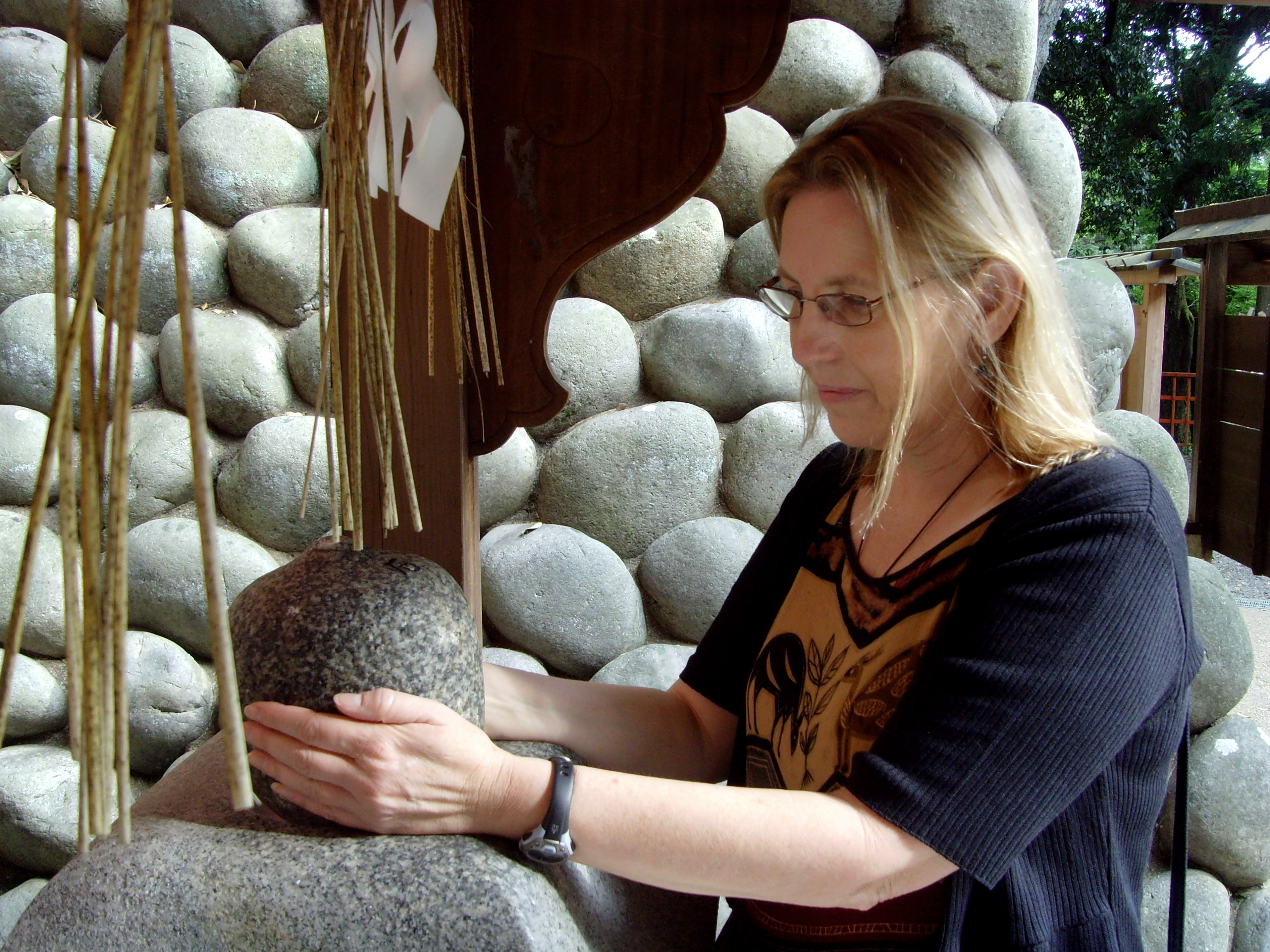
Kyoto- If I can lift the rock my wish comes true!

Living in the future creates anxiety.

Living in the past creates depression. 

When I talk about healing the past, what I hear most is “how do I do that?” Well, there are many modalities for healing the past. One way is to become aware of the memories and the wounds.  Feel them and change your beliefs around them. Your feelings are a result of your beliefs. Often your beliefs flitter so quickly in your mind, you have difficulty noticing them, grabbing them and examining them.

Start with the feelings you can identify. In your journal, write out a list of people and situations where you have been hurt or angry. Allow yourself to feel your feelings as you remember. Be gentle and compassionate with yourself.

Look at where you may have contributed to the situation. Take inventory of your own actions. You can use the successful process from the Big Book of AA.  When taking inventory, write out where you were selfish, self-centered, frightened, or to blame.

Now, you may not have had any responsibility in the situation, especially if you were a child. In that case, look at what was going on in the other person’s life at the time.

IMG_0156People do the best they can at the time. Sometimes their best is destructive and hurtful to others, but it still is the best they can do with the awareness, teachings and the consciousness they have at the time. Are there some things you would like to do that you don’t do? Are there behaviors you have that you wish you didn’t? Have you behaved in the past in ways you would not behave today because you know better? No one is perfect!

Anger is a secondary emotion that covers up pain or fear.

When you have had desires, demands or expectations of someone, and they don’t do what you want or give you what you want, you respond by feeling angry or hurt.

If this happened in your past, in order to heal yourself and move on, you can forgive them. If it is a present situation, then you can make choices on how you choose to handle the situation. If you choose to continue to stay in a destructive situation, that is your choice. The responsibility then becomes yours. You cannot blame the other person when you choose to stay. What happens when you blame someone else is, then only thy have the power to change the situation and you become a victim. When you take responsibility for your choices, you remain empowered and in control of your life.

 If you still have a lot of pain or anger about the situation, write out what happened to you. You can write it over and over until the “sting” or “charge” is gone. You may want to read it over and over to a safe, loved one, until the memory is no longer controlling you. You can forgive and move on. This does not mean you agree with what happened, it just means it no longer controls you.

 Only you have the ability to clear your past and live fully in present time, thus giving you the power to create the life you want to live.

Clearing frees you to live in present time!

Live_Intuitively_Cover


Live Intuitively: Journal the Wisdom of your Soul will help you with writing prompts called Soul Stems™ to heal your memories and emotions.

  • 1
  • 2
  • 3
  • Next Page »

Candess M. Campbell, PHD.

Copyright © 2026 · Eli Overbey

Copyright © 2026 Energy Medicine DNA· Website Design by Inspired Melissa · Log in