Energy Medicine DNA

Call your Psychic!

  • Home
  • Raves
    • Share Your Experience
  • Education
    • Self-Help Toolbox
    • DNA Activations
      • DNA FAQ
    • Chakras
    • Lords of Karma
  • Services
    • DNA Activations
      • DNA FAQ
    • Psychic Readings
      • Chakra Audio Program
      • Developing Clairvoyance
    • Karmic Clearing – Essential Energy Balancing
      • EEB I Workshop
      • EEB II Workshop
      • EEB III Workshop
      • EEB FAQ
    • Reiki Classes
      • Essential Reiki I
      • Essential Reiki II
      • Essential Reiki III
    • Psychic Parties
    • Intuitive Coach and Mentor
      • Relationship Coaching
    • Hypnotherapy
  • Books & Products
    • Audio Downloads
    • Books
    • Live Intuitively: Journal the Wisdom of your Soul!
    • 12 Weeks to Self-Healing
    • 12 Weeks to Self-Healing Audio Course
  • Events
  • Blog and Media
    • Blog
    • Media
      • Videos
      • Podcasts
    • Interviews
    • Articles
    • E-Newsletter
    • Site map
  • Contact
    • Contact Candess at candess@candesscampbell.com 509.363.1789

Sexual Addiction!

July 19, 2014 by @candesscampbell


“Sex without love is as hollow and ridiculous as love without sex.” 

― Hunter S. Thompson


Sexual addiction! What is it? With the accessibility of stimulation through the Internet and mobile phones, there is a lot more exposure to the issue of sexual addiction. In my private practice as a mental health and addictions counselor, more and more clients are showing up who need help from this addiction. Actually it is usually the partner of the addict that is either reaching out for help or giving the addict an ultimatum – get help or else. Whether it be prostitution, pornography or chronic masturbation, it can wreak havoc in their lives and the lives of those they love.  In response to this, the treatment community has begun to use sexual addiction assessments along with alcohol and drug assessments.

Working as a chemical dependency counselor at a Federal prison camp in the mid-1990s, during the “war on drugs,” we began assessing for childhood sexual abuse and past sexual abuse. Nearly all of the female clients had been sexually abused. Some of the men said yes, but I suspect even with the promise of confidentially, they did not admit to this. Many who have been abused don’t remember, but issues show up later in their relationships.

Most of my clients who were diagnosed as sex addicts had been women and men who had a history of past sexual abuse and at some level attempted to find balance and healing, but instead found themselves in relationships where they became sexually addicted and often exploited. Some went on to be sex offenders. One example is a past client I counseled. He had been abused by his older brother and then went on to sexually abuse his nephew.

A leader in the field of Sexual Addition treatment is Douglas Weiss, PhD. This article summarizes the 6 Types of Sexual Addicts, a model he developed, which became the standard used to certify Sexual Recovery Therapists by the American Association for Sex Addiction Therapy.


Six Types of Sexual Addicts

1. Biological Sexual Addict

Weiss states this is the most common sex addict. Basically the behavior is “ring the bell, feed the dog, ring the bell, feed the dog” like Pavlov’s conditioning. What happens is during orgasm; the endorphins that are released create an attachment to what is happening at the time. So whether this is a real or imaged person, the chemical release in the brain creates a bond. These endorphins, “almost four times as strong as morphine,” are the highest chemical reward the brain can come by, legally. Therefore, “your brain literally glues to, hungers for, craves, and wants to repeat that activity again.”

Weiss states that the Biological Sex Addict probably represents less than 15% of all sexual addicts, and is the baseline of all the sexual addictions. Most also have components of the other five types.

In my own counseling practice, many of my female clients who have a history of sexual abuse fall for his type of addict. They become the sexual object for them.

2. Psychological Sexual Addict 

This person is often the one who has experienced emotional or physical abuse in his life. Due to the lack of love, touch, or security, as a child he sets up a fantasy life. This sense of neglect can carry on into adulthood and when his needs sare not met at home, he creates a fantasy world where he feels adored, worshiped, and desired. This is the man who fantasizes he is the best, the biggest, the greatest, etc. If he has been dominated in his life he may fantasize as being the one who is dominating.

In his psychological fantasy, he feels sexually powerful, loved and wanted. In his imagination, he doesn’t have to deal with real women who may say no, ask him for commitment, ask for help with the housework or ask for emotional intimacy. Once this fantasy is paired with the powerful chemical endorphins, he is hooked.

3. Spiritual Based Sexual Addict

Similar to the psychological sexual addict, this addict is looking for a connection. There is a strong desire for a spiritual connection. They look to find it within their sexual addiction. In this case, once they have a spiritual experience through a religious encounter, an experience with Jesus or another guide or Guru, the sexual addiction stops. “Their sexual addiction just plain stops, because that’s where the origin of the ache or the need was for the individual.” These people rarely get help within the clinical community.

4. Trauma Based Sexual Addict

The trauma based sexual addict is the client I have most experience with. In this case, he or she has experienced sexual trauma, most likely as a child or adolescent. These clients go on to mirror their trauma in their relationships. For example a young girl who was sexually abused by an older uncle may end up in relationship after relationship with older men. She may despise herself for this, but continue the behavior and recreate the shame. A woman who has been physically abused in conjunction with a sexual trauma may act out being abused in the sexual act in order to be satisfied and make attempt after attempt to find the right partner, shaming herself all the way. She becomes a sexual addict that is also the sexual object of another addict.

5. Intimacy Anorexic

Although a separate issue from sexual addiction, Weiss states intimacy anorexia affects around 29% of sex addicts. Generally, the anorexic behavior is related to “sex addiction, sexual trauma, neglect in the family and cross gender attachment disorder.” There also may be related to other co-occurring disorders. Weiss describes intimacy anorexia as when a “spouse intentionally withholds emotional, spiritual and sexual intimacy.” They may control through silence, anger, or withholding money. They blame their spouse, withhold love, tend to be critical, and are unwilling to talk about their feelings. This is a difficult situation for the addict because as they are working on their own recovery, whether it be abstaining from prostitutes, masturbation, or pornography, they also need to learn to move toward their spouse or partner and re-create a healthy relationship. They have to learn to feel and communicate their feelings.

 6. Mood Disorder

Sexual addicts who also have a mood disorder are another type of sex addict. Weiss shared about clients who were bipolar or had cyclothymic disorder and were medicating the imbalance neurologically through the ejaculation response. Until the medication was adjusted properly, they continued to relapse.

When you hear the term sexual addict, it may conjure up an image of someone being sexual, playful and having fun. The truth is the very opposite. Although the sexual thoughts and behavior may start that way, as in any addiction, the person loses control and their life spirals downward. Sexual addicts generally have low self-esteem and believe no one will love them as they are. They lack emotional intimacy and are continually pre-occupied with sex and sexual fantasies. They feel out of control and experience mood swings. They are filled with feelings of guilt and shame.

You may wonder, how sexual addiction is different from normal sexual behavior.

Weiss explains, “in a normal situation, a person is having sex inside a relationship context. He/she is gluing to the person, the eyes, and the soul of the person he/she is being sexual with.” This is different than having the object of sexual fulfillment being images that do not respond. Addiction creates lack of control, shame, and self-loathing and destroys relationships.

 As with all addictions, recovery is a one-day at a time process. Interventions and treatment planning is different for each specific person. Most often when one is treated for sexual addition, the chances of recovery are better when their spouse or partner is involved.

 In addition to treatment centers like the Heart to Heart Counseling Center in Colorado Springs, Colorado, where Dr. Weiss is the Executive Director, there are also 12 Step Programs such as Sex Addicts Anonymous. https://saa-recovery.org/ There are several other similar programs that provide help.

 The Six Types of Sexual Addicts information came from a written interview of Dr. Weiss by Barbara Alexander and my email communication with him.

 Douglas Weiss, Ph.D., is the Executive Director of Heart to Heart Counseling Center and the author of The Final Freedom: Pioneering Sexual Addiction Recovery (Discovery Press, 2008).

 Heart to Heart Counseling Center 719-278-3708

heart2heart@xc.org.  Website www.sexaddict.com. 

This article was originally published In Live Encounters Magazine! 

Sexual Compromise

July 4, 2014 by @candesscampbell

Communication between couples has evolved over the last decade. Often they actually negotiate their sexual desires with each other. Whether or not they come to a mutual conclusion is another story. Even television commercials poke fun at the difference in men and women’s libido and their desire for sex. Of course this is a general perspective and definitely there are women who are poking at their men too.

The scope of this article relates to committed relationships. Casual sexual relationships have a whole different dynamic that won’t be explored here. So let’s take an example.

 3It was an incredible night. Brandon and Emma celebrated their seven-year anniversary at Alinea, a modern Chicago restaurant with excellent reviews. Having had a busy week, they planned a quite evening together. As a law professor at Loyola, Emma worked long hours and at varied times during the week. Brandon traveled as an international broker and this left them juggling for relaxed time together.

After a delicious meal of king crab and scallops, with fine white wine, they walked along the lakefront in Lincoln Park, reflecting back on when they met. The first time in many years, they reminisced about their combined dreams. The night was perfect. The streets were unusually quiet as they visited a couple galleries and enjoyed the city lights. 

In the cab ride home they sat quietly enjoying the smell and the warmth of each other’s bodies. Emma felt content as she noticed they were breathing together as one. Once home, already having had a couple drinks, they moved directly into the bedroom. Intimacy had given way to work for the last few months, and they were finally at ease. They crawled into bed and she looked at him adoringly as she kissed him. She thanked him profusely for the wonderful evening. He began to kiss her passionately and his hands began to explore her curves. His expectation and hers collided.

She – had a wonderful night, hadn’t been intimate with him for a long time, has been stressed and busy at work, wants to close her eyes and experience the sensations of being in love and cuddle.

He – finally had time with his wife. Has not had sex with her for weeks. Planned this evening so they could finally be sexual again. Did all the right moves as far as planning goes and is ready to “finish the deal.”

Sound familiar?  We could change the names, city, careers, circumstances just like a fill in the blanks puzzle, but overall, internationally, the results are the same.

So, who compromises in the sexual arena and at what cost?  Her need and desire is for closeness, commitment, security and love. He desire is for a woman, Emma, who will be there for him, being sexual when he wants her to be, to share activities and the convenience of love.

She responds to romance and sexuality when there is ambiance, connection, closeness and communication. Brandon focuses on his virility and what I refer to as his “puffing peacock” stance. History between Brandon and Emma around negotiating intercourse has shown him this is a precarious time, so he is aware of not triggering any reactions from her.

Nevertheless, whether or not the evening ends with the couple joyfully entangled or not – who’s to know? Maybe you can relate.

Who is responsible for ones sexual expression, sexual desire, and sexual pleasure? This case was not so extreme, but what would you do if you were in a committed relationship or marriage and your partner/spouse continually said no?  Is it your moral and religious obligation to stay; to stay faithful and live the rest of your life without being sexual with your wife or husband?

If you are a woman who is sexually unresponsive or non-orgasmic, either due to lack of physical desire (possibly hormonal,) illness, or having a husband who goes straight to the sexual act with no ability or understanding how to engage you and fire your desire; what do you do?

At what point do women add having sex to their list along with doing the laundry, picking up groceries and attending their daughter’s dance recital? When I was in India recently, I sat at the breakfast table before my friend completed his yogic breathing. I had tea and checked my email. Every morning I heard what sounded like a woman having an orgasm. I was with my friend’s family and I didn’t speak Bengali and they didn’t speak English. They didn’t seem to notice, but, nevertheless, I felt embarrassed. I shared this with my friend when he joined me and he said, oh, no, Indian women don’t make noise. Really I asked. He assured me this was true and said she must be praying.

Well, I didn’t buy it! Later we continued our conversation, which lead to American woman being passionate and vocally expressive. I explained this was also a validation to their lover. This discussion of course was destined to end up talking about “faking it.” He had not even conceived of any such behavior by women and ultimately in my need to be right, I searched youtube on my Mac Air and found the famous scene from When Harry Met Sally.  (link here) https://www.youtube.com/watch?v=3hY7_CNuEQY

My friend was astonished and definitely humored by this funny scene. Then, the sound I had been hearing every morning began and I begged, “listen, listen there it is.” He looked at me with surprise and said, “she is praying.” Okay, he was right.

Right or wrong, I believe every sexual relationship has compromise. The hope would be that each person takes his or her share of compromise, but more often it is one person who gives in.  What is the cost?  Resentment, lack of true intimacy, aggression, depression, marital prostitution; I could go on. Most likely the couples separate at least emotionally, if not physically. Whether an affair ensues or not, there is an unspoken agreement, and they live as roommates, or what I call, married singles.

Delving so deeply into this topic, I yearn for a solution; so here it is.  To men I ask that you understand that foreplay is not rubbing up against a woman, telling her about how great you are, or beginning to kiss and fondle her with the expectation of sex. If you don’t have a satisfying pattern of sexuality, or if your intimacy is routine and stagnant, please understand.  For most women, foreplay begins at least anywhere from 12 – 72 hours prior to intercourse. Women are sensual and emotional beings. Engage their senses. Get to know your woman. Does she like her back rubbed with scented oil, to have you whisper in her ear or kiss the back of her neck? Is she responsive to the vibe of a candle or burning fire, to jewelry or flowers? Does she become stimulated by a romantic and succulent meal or a night on the town? These behaviors begin long before the sexual encounter.

To women who love men whose sexual desire overrides yours, please speak up. Men in general are not nearly as complicated as you might think. Communication is absolute, and generally women must take the lead in this area. Communicate, even when it is difficult and you keep hitting roadblocks. When you are together and sexuality is not the immediate issue, take some time to share what you like. Share whether it is better for you when you advance toward him with intimacy, or when he moves toward you with desire. Let him know what is stimulating for you and what sets the mood. Men in general love to please women! Give him the roadmap so both of you can enjoy the journey.

Candess M. Campbell, PhD is the #1 Best-selling author of 12 Weeks to Self-Healing: Transforming Pain through Energy Medicine. She is in private practice in Washington State (US) as a licensed mental health and chemical dependency counselor. Internationally she is an Intuitive Consultant, Speaker, and Seminar Leader.

This article was previously published in LiveEncounters Magazine where Candess is a monthly contributor.


Clearing the Past

June 19, 2014 by @candesscampbell

“Indifference and neglect often do much more damage than outright dislike.” 
― J.K. Rowling, Harry Potter and the Order of the Phoenix

Over the years, what I have taught is manifesting and creating the life you want. In order to do this, you have to bring the past into “present time.” What I mean by this is that when you focus on the past and live in the past, your life is controlled by what you felt and thought in the past. What happens is you continue to feel those feelings in the present.  Living in the past leaves no room for what you are experiencing in the present. Living in the past, having your thoughts and feelings consumed by the past, can also control your future. Your past becomes your future.


Kyoto- If I can lift the rock my wish comes true!

Living in the future creates anxiety.

Living in the past creates depression. 

When I talk about healing the past, what I hear most is “how do I do that?” Well, there are many modalities for healing the past. One that I teach is to become aware of the memories and the wounds.  Feel them and change your beliefs around them. Your feelings are a result of your beliefs. Often your beliefs flitter so quickly in your mind, you have difficulty noticing them, grabbing them and examining them.

The ones you can identify is where to start. In your journal, write out a list of people and situations where you have been hurt or angry. Allow yourself to feel your feelings as you remember. Be gentle and compassionate with yourself.

Look at where you may have contributed to the situation. Take inventory of your own actions. You can use the successful process from the Big Book of AA.  When taking inventory, write out where you were selfish, self-centered, frightened, or to blame.

Now, you may not have had any responsibility in the situation, especially if you were a child. In that case, look at what was going on in the other person’s life at the time.

IMG_0156People do the best they can at the time. Sometimes their best is destructive and hurtful to others, but it still is the best they can do with the awareness, teachings and the consciousness they have at the time. Are there some things you would like to do that you don’t do? Are there things you do that you wish you didn’t? Have you behaved in the past in ways you would not behave today because you know better? No one is perfect.

Anger is a secondary emotion that covers up pain or fear.

You may have had desires, demands or expectations of someone. Then you find they didn’t either give you what you wanted or they behaved in ways that hurt you.

If this is so and is in the past, in order to heal yourself and move on, you can forgive them. If it is a present situation, then you can make choices on how you choose to handle the situation. If choose to continue to stay in a destructive situation, it is your choice. The responsibility then becomes yours. You cannot blame the other person when you choose to stay. What happens when you blame someone else is, they then have the power to change the situation and you become a victim. When you take responsibility for your choices, you remain empowered and in control of your life.

 If you still have a lot of pain or anger about the situation, write out what happened to you. You can write it over and over until the “sting” or “charge” is gone. You may want to read it over and over to a safe, loved one until it is no longer controlling you. You can forgive and move on. This does not mean you agree with what happened, it just means it no longer controls you.

 Only you have the ability to clear your past and live fully in present time, thus giving you the power to create the life you want to live.

Clearing frees you to live in present time.

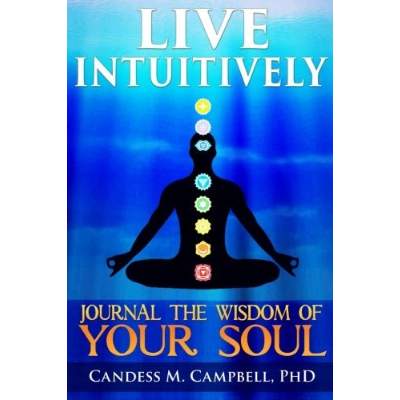
Live_Intuitively_Cover

 Live Intuitively: Journal the Wisdom of your Soul will help you with writing prompts called Soul Stems™ to heal your memories and emotions.


Meditation

June 17, 2014 by @candesscampbell

“Feelings come and go like clouds in a windy sky. Conscious breathing is my anchor.” 
― Thích Nhất Hạnh, Stepping into Freedom: Rules of Monastic Practice for Novices

The greatest gift I have found to develop a greater intuitive experience is meditation. It was in my meditative experience one morning I was given a specific meditation I now use.

meditation

Many of you already meditate and if you do, that is wonderful! You know the value of creating this time for yourself and the incredible connection you find with your Higher Self and the Divine. For many there is also the experience of connecting and communicating with Angels or Guides.

Many people who have tried meditation and don’t continue often think they are doing it wrong. Let me clarify some of the misconceptions. In meditation, you will not stop thinking. You have a central nervous system and therefore your brain will be thinking. What happens instead is you quiet your thoughts and rather than active thinking, you have what I call passive thinking. This means thoughts will enter and go by, but you just notice and don’t actively follow them. You can then return to your quiet mind.

I have also found people have a hard time quieting their mind when they meditate in the middle of the day or in the evening. I like to meditate first thing in the morning before leaving my bed. This allows me to tap into the wisdom of my subconscious mind and my Higher Self that has guided my dreams. Meditating in the morning also allows me to become filled with the Light of the Divine first thing in the morning!

For those who have not began the practice of meditation, here is a simple way to begin. Here is the meditation I have been given.

Set a timer to begin. This will help you to lengthen the time of your meditation.

As in other meditations, sit with your spine straight. I like to place my hands on my lap with my thumb, index and middle finger touching, facing upward.

Close your eyes. Take a deep breath and relax and adjust your body as needed.

Image a grounding cord such as a beam of light, a waterfall or a tree trunk going down from the base of your spine to the fiery center of Mother Earth. Release all the stress, tension and foreign energy down from the top of your head, down your face, shoulders, arms, hands, chest, upper and lower back, belly, pelvic area, hips, legs, ankles, and feet down your grounding cord.

Take another breath and bring your attention to above your head, to your crown chakra. Imagine a golden white Light spiraling down through the top of your head and spiraling in your heart. This is the spark of the Divine within you! This spiraling Light will emanate Light throughout your body and a few inches outside your body all around you.

Bring your attention to your third eye, which is between your eyes and a little above. Envision a water-blue color triangle at your third eye. Focus your attention through this triangle. Above your head about eight inches envision a burning ring of fire. This is the Eternal Flame of Isis. I share more about the triangle and the burning ring of fire when I teach intuitive reading.

Now you have the Golden Light Spiral, the Blue Triangle and the Fiery Ring of Fire set, bring your attention to your eyes. With your eyes still closed, move your eyes from right to left back and forth about 12 – 20 times. The pace is about one second for each set of from right to left and back. You can adjust this later to the best pace for yourself. This movement will be like pushing your eyes (with them closed) back and forth.

What you will notice is this takes you into a deeper into a meditative state. This increases with practice. Stop the eye movement and just be. Just notice what you experience. Stay in passive thinking and just experience and notice.

If you find you are thinking and lose the meditative sense, or you begin to come out of meditation, then use the eye movements back and forth to deepen again. This brings you back into a meditative state.

You may need to use the eye movement several times to deepen your meditation and this is fine. This takes practice, but if you commit to every day for a week, with a timer, this can change your life and increase not only your intuition, but your relationship with your Self and the Divine!

An added bonus, this eye movement is also therapeutic. It can assist in healing memories and traumas because moving your eyes from one side to the other activates the two hemispheres of the brain. When you begin your meditation you can set an intention of healing a specific situation, emotion, feeling, or thought.

Originally published in LiveEncounters

Commitment

June 6, 2014 by @candesscampbell

“I mean, if the relationship can’t survive the long term, why on earth would it be worth my time and energy for the short term?”
― Nicholas Sparks, The Last Song

As stated in the beginning of this year, my word for 2014 is Relationships. This year, my commitment has been to come closer into relationship with those I love and care for. It also means becoming aware of the relationships that have been dysfunctional and stressful and if possible to ease out of these relationships, making more time to deepen my relationship with myself and with others.

pigpenThe reality is, when you are in relationship, and especially when you create a new intimate relationship, all the unfinished emotional business is right in your face. It reminds me of the “PigPen” character from Charlie Brown, except the dust and dirt is literally right in your face!


You have to learn to set boundaries, compromise, be compassionate, communication clearly, understand yours is not the only perspective and the list is nearly endless.

Even more than that, when you are in an intimate relationship, it is necessary to become vulnerable. Of course, it is best to choose a partner who is safe so you can be vulnerable! Most of us have been hurt in the past. Staying in “present time” with your new love is important. It is not helpful to treat your current partner as if she or he is going to behave like the one who cheated on you, could not communicate at all, or had a slight attachment disorder and played “come here, go away!”

So a few things to think about in your relationships.

1. You will tend to be happier if you don’t fall in love with potential. When you are evaluating your choices around relationship, ask yourself if you would be happy with this person long term, even if she or he did not change anything at all. Most likely other people don’t change just because we want them to.

2. Speak up in the beginning of the relationship and let your needs be known. Many people don’t rock the boat for fear the other person will leave or not like them; especially in the beginning excitement of the relationship. Tell your partner who you are, what you want and be real about it. Too often I see people keep quiet and then either become angry when the other person doesn’t know what they want. They expect the one they love to be a mind reader. Then they either blow up on the outside and become angry and argumentative or on the inside and become ill and/or passive aggressive. If they leave when you communicate, they are not a good fit. You deserve to be loved for who you are.

3. Opposites may attract, but in the long run, if you don’t have the same interests, it is difficult to stay connected. If you are single and looking for a relationship: look in the places that you already go.

4. And lastly, when your relationship is with your family – understand neutrality and amusement. When there is conflict, see your family from a neutral place. It is not helpful to try to change them or get them to see things your way. Who has been able to change you and change how you think by telling you over and over. Be amused at how they choose to live their life and focus back on yourself and create happiness in your own life.

May 2014 Astrological Forecast

May 6, 2014 by @candesscampbell

May 2014 Astrological Forecast

http://www.stillwatersastro.com

stillwaters_image-209x179

May 2nd: Venus enters Aries.  Lady Venus arrives in the aggressive cardinal fire sign of Aries in pursuit of spring romance. As she strolls through each degree of Aries between now and May 28th she will certainly have no shortage of suitors to choose from.

May 7th: Mercury enters Gemini. The messenger planet celebrates a spring homecoming in its own sign of Gemini.  The greatest quandary of Mercury in Gemini is who or what to choose and how long might it last until mercurial Mercury becomes bored and decides to move on?

May 14th: Full Moon in Scorpio/Taurus. The annual Wesak Full Moon of Buddha consciousness reaches it zenith at 12:16 pm PDT. Those with planets or chart angles between 20 to 30 degrees in the fixed signs of Scorpio, Taurus, Aquarius, or Leo are likely to experience a completion or change of direction in their lives.

May 19th: Mars turns direct in Libra. Mars steps forward in the sign of Libra for the first time since it retrograded on March 1st.  The past eleven weeks in retrograde have served Mars well, as the warrior planet secured its coveted seat in April’s Cardinal Grand Cross.

May 20th: The Sun enters Gemini. The Sun’s arrival in the mutable air sign of Gemini ushers in the final month of this spring season preparing the way for the arrival of summer on the June 21st Solstice.

May 28th: New Moon in Gemini and Venus enters Taurus. Today’s New Moon in Gemini harmonizes with Mars in Libra while activating mystical Neptune in Pisces.  Perhaps we will receive some clues as to what the first nine weeks of this spring season represented to each of us as summer approaches. In the meantime, Venus arrives in Taurus returning to earth after a passionate spring fling in the sign of Aries.

May 29th: Mercury enters Cancer. Mercury crosses the finish line of its annual homecoming in Gemini to immerse itself in the foreign oceanic depths of Cancer where it will retrograde on June 7th as it pivots to retrace its steps back to its native sign of Gemini on June 17th.  Ambidextrous Mercury thrives on juggling and testing itself with each of the twelve signs, and it will turn on a dime leaving both its team mates and opponents wondering how Mercury was ever admitted to play in the celestial sports court in the first place.

 Stay tuned for June’s forecast!

by Lee at 

http://www.stillwatersastro.com

  • « Previous Page
  • 1
  • …
  • 17
  • 18
  • 19
  • 20
  • 21
  • …
  • 26
  • Next Page »

Candess M. Campbell, PHD.

Copyright © 2026 · Eli Overbey

Copyright © 2026 Energy Medicine DNA· Website Design by Inspired Melissa · Log in